Telehealth or the Exam Room? A Physician's Frank Guide to Choosing the Right Care Setting
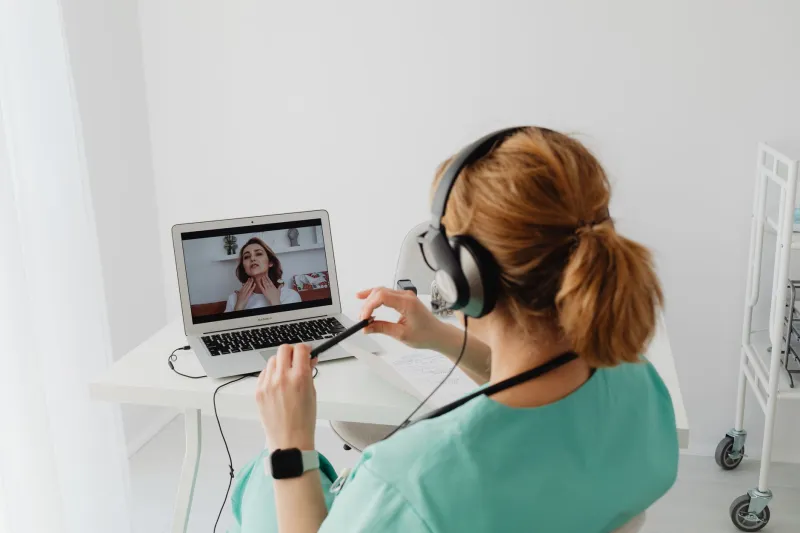
The expansion of telehealth over the past several years has been, on balance, a genuine advance for American healthcare. Patients in rural communities who previously traveled hours for a follow-up appointment can now connect with their physician from home. Working parents no longer have to choose between a sick day and a medical visit for a straightforward concern. People managing chronic conditions can check in more frequently without the logistical burden of an office trip.
And yet — as a clinician who has practiced in both modalities — I want to be candid with my patients about something the healthcare industry does not always emphasize: telehealth has real limitations, and choosing the wrong setting for a given concern can delay diagnosis, produce clinical errors, or simply result in an unsatisfying and incomplete encounter.
This is not a critique of virtual care. It is an honest clinical assessment — the kind I offer every patient who asks me which option they should choose. My answer is always the same: it depends entirely on what is happening with your health.
When Telehealth Works Well
1. Medication Management and Prescription Refills
For established patients on stable medications — antihypertensives, thyroid replacement, antidepressants, antihistamines — a telehealth visit is often entirely appropriate for routine refill discussions, provided recent lab work is on file and there are no new or changing symptoms. The conversation is primarily cognitive and relational; it does not require physical examination.
2. Minor Acute Illnesses With Clear Presentations
A sore throat without difficulty swallowing, a mild urinary tract infection in a young woman with classic symptoms, a known seasonal allergy flare, or a cold sore — these are presentations where clinical history alone is frequently sufficient for diagnosis and management. A video visit allows me to observe your general appearance, hear your voice, and gather a thorough history. For many straightforward complaints, that is genuinely enough.
3. Mental Health and Behavioral Health Follow-Up
Research has consistently demonstrated that telehealth is highly effective for mental health care — including therapy, psychiatric medication management, and counseling for anxiety, depression, and stress-related conditions. Many patients actually report feeling more comfortable discussing sensitive psychological concerns from the privacy of their own home. This is one area where virtual care has proven to be not merely equivalent but, for some patients, preferable.
4. Chronic Disease Monitoring (Stable Patients)
For patients with well-controlled conditions — stable hypertension with home blood pressure logs, managed hypothyroidism with recent TSH results, controlled type 2 diabetes with current A1c values — telehealth check-ins between annual in-person visits can meaningfully improve continuity of care without placing unnecessary burdens on patients' schedules.
5. Post-Procedure or Post-Hospitalization Follow-Up
For patients recovering from minor procedures or a recent hospitalization, a telehealth visit within the first week allows me to assess symptom trajectory, review discharge instructions, and identify early warning signs — without requiring a patient who may still be fatigued or uncomfortable to travel to the office.
When In-Person Care Is Not Optional
1. Any New, Unexplained, or Concerning Symptom
This is perhaps the most important category. When a patient presents with a symptom that is new, unexplained, or clinically concerning — chest discomfort, unexplained weight loss, a new lump, vision changes, neurological symptoms, significant abdominal pain — a physical examination is not a formality. It is a fundamental diagnostic tool. Auscultating heart and lung sounds, palpating lymph nodes or abdominal organs, assessing reflexes, examining skin lesions — these findings cannot be replicated on a video screen, and missing them can have serious consequences.
2. Pediatric Visits and Well-Child Examinations
Children require hands-on assessment. Growth measurements, developmental screening, ear examinations, evaluation of lymphadenopathy, and the clinical gestalt that experienced pediatric clinicians develop from observing a child in person — none of these translate adequately to a virtual format. Well-child visits and any acute pediatric concern beyond the most superficial should be conducted in person.
3. Annual Physical Examinations and Preventive Screenings
A comprehensive annual physical is inherently a hands-on clinical event. It includes blood pressure measurement, cardiac and pulmonary auscultation, skin examination, breast or testicular examination, abdominal assessment, and review of age-appropriate screening recommendations. This visit forms the clinical foundation of preventive care and cannot be meaningfully replicated via telehealth.
4. Dermatological Concerns Requiring Biopsy or Close Examination
While teledermatology has made meaningful strides, any skin lesion that raises concern for malignancy — irregular borders, changing pigmentation, unusual texture — requires in-person examination under appropriate lighting, and frequently dermoscopy or biopsy. Do not rely on a video visit to rule out a serious skin condition.
5. Musculoskeletal Injuries and Pain Assessments
Evaluating range of motion, joint stability, muscle strength, and the precise localization of pain requires physical examination. A patient describing knee pain after a fall, shoulder discomfort with overhead movement, or back pain with radicular symptoms needs to be seen — not because telehealth is inadequate in general, but because the diagnostic yield of a physical musculoskeletal exam is simply irreplaceable.
6. Any Situation Involving Diagnostic Testing
If your concern is likely to require bloodwork, imaging, a rapid strep or influenza test, an EKG, or any other in-office diagnostic procedure, coming in person from the outset saves time, reduces delays, and typically leads to faster clinical resolution.
A Framework for Your Own Decision-Making
When patients ask how to decide, I offer this practical framework:
- Is this a new symptom you cannot fully explain? Come in.
- Is this a follow-up for a known, stable condition with recent objective data? Telehealth may be appropriate.
- Do you think you might need a test, prescription, or physical assessment? Come in.
- Are you a child, or is this a well-visit or preventive screening? Come in.
- Is this a mental health follow-up or a medication refill for a stable condition? Telehealth is often well-suited.
My Commitment to You as Your Physician
I want to be transparent about something: in a healthcare environment where telehealth has become a significant revenue driver for many practices and health systems, there can be institutional pressure to steer patients toward virtual visits regardless of clinical appropriateness. That is not how I practice medicine.
My obligation is to your health outcomes — not to scheduling efficiency. If I believe your concern requires an in-person examination, I will tell you that directly and ensure you can be seen promptly. If I believe a telehealth visit will serve you just as well and spare you an unnecessary trip, I will say that too.
Both modalities have an important place in modern medicine. The key is matching the right tool to the right clinical situation — and that judgment is exactly what your physician is here to provide. If you are ever uncertain which type of visit is appropriate for your concern, please call our office. We are glad to help you decide before you book.